Showing posts with label maths. Show all posts

Friday, 19 February 2021

February 2021, The Perfect, Pretty Rectangle Month

 February is the only month that can sometimes form the perfect rectangle. 


When it is not a leap year, February has 28 days. 28 is divisible by 7. Perfect for a rectangle.


To be a pretty rectangle, February 1st has to be on a Sunday. That will always make  for a Friday 13th, for those who are superstitious.

No other month can ever make the perfect pretty rectangle that February has made in 2021 because 30 and 31 days are not divisible by 7. So you will always have extra days left over even when the 1st day is on a Sunday.
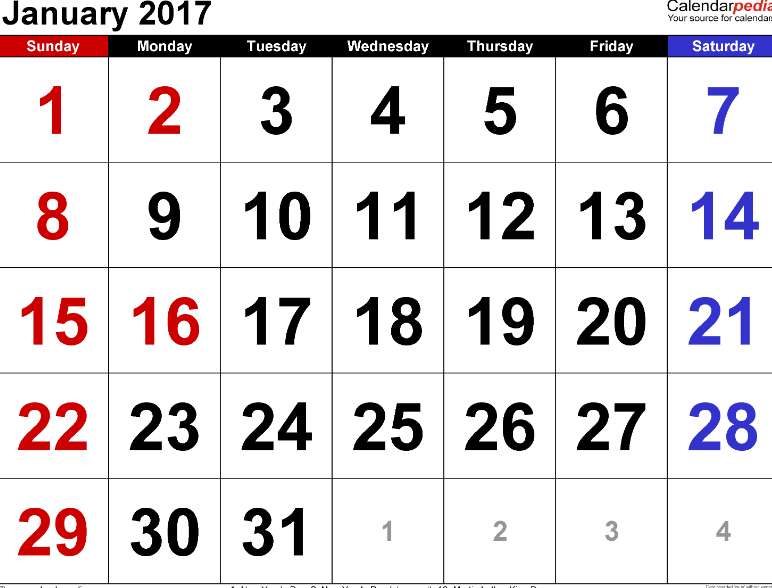


Perfect, pretty rectangular February's happen every 6 or 11 years.       


Wednesday, 17 February 2021

A New Math's Challenge to Start 2021

 We had a new Math's challenge that we worked on this week. 

How could we equal all the numbers from one to twenty using four 4's. We could use any mathematical sign. We couldn't use three 4's, or even five 4's. We had to restrict ourselves to exactly four 4's.

We got really stuck until Mr. Waller showed us factorial 4's. Factorial 4's are recorded like this 4! 

4! = 4 x 3 x 2 x 1

4!= 24


Here are our answers...

1. 4 - 4 + 4 ÷ 4 = 1

2. (4 ÷4)+(4÷4)= 2

3. (4+4+4) ÷ 4 = 3

4. (4 - 4) x 4 = 0 + 4 = 4

5. (4 x 4) + 4 = 20 ÷ 4 = 5

6 (4 + 4) ÷ 4 = 2 + 4 = 6

7. (44 ÷ 4) - 4 = 7

8. (4 x 4) - (4 + 4) = 8

9. (4 ÷ 4) + (4 + 4) = 9

10. (44 - 4) ÷ 4 = 10

11. (4! + 4!) - 4 = 44 ÷ 4 = 11

12. 4! - (4 + 4 + 4) = 12

13. 4! - (44 ÷ 4) = 13

14. (4! ÷ 4) + (4 + 4) = 14

15. (44 ÷ 4) + 4 = 15

16. 4 + 4 + 4 + 4 = 16

17. (4 ÷ 4) + (4 x 4) = 17

18. (4.4 x 4) = 17.6 + .4 = 18

19. 4! - (4 ÷ 4) = 23 - 4 = 19

20. 4! + 4 - (4 + 4) = 20


After we completed this challenge, we had a go at doing the same thing with five 5's.


Lots of creative problem solving and collaboration took place in this Math's challenge.


Thursday, 26 September 2019

Tessellations

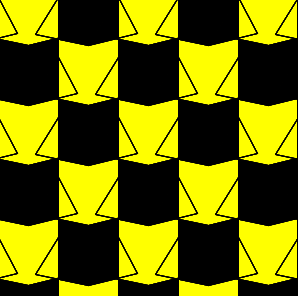
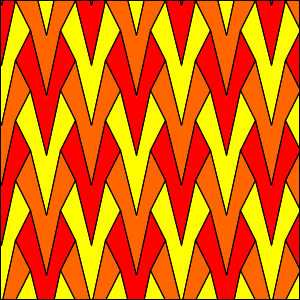
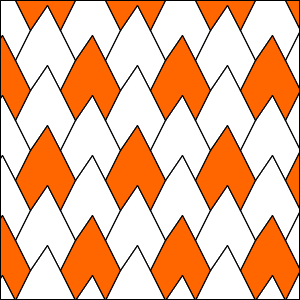
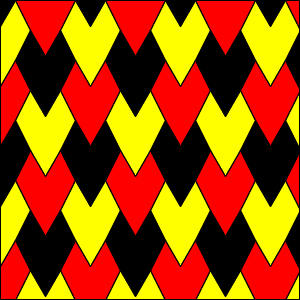
We have been making tessellations, patterns that repeat and cover an area without any gaps or overlaps.

We made some by using a piece of cardboard to make a stencil block. We started with a rectangle shape and cut a piece out on one side. Translate that piece across to the opposite side and tape it on. If you want to, cut a second piece out from one of the other sides and translate that piece across.


Then use the stencil block to cover a piece of paper, repeating the pattern without any gaps or overlays.

Repeat the colours in a pattern...


We had a lot of fun on this interactive website Shodor.


Friday, 1 September 2017

Probability

We rolled two dice. We worked out the sum of the dice. We knew that the lowest sum possible sum was 2 by rolling a 1 + 1, and the highest possible sum was 12 by rolling a 6 + 6.

What was the probability of rolling a 12? Was it the same chance as rolling a 7?

Each group recorded their scores on tally charts. We them compiled the groups totals on a spreadsheet. From the spreadsheet we created a bar graph.


We learned a lot about how to make different types of graphs.


The chances of getting a 12 are a lot less than the chances of getting a 7.
To get a 12 you have to roll a 6 + 6
To get a 7 you can roll

  • 1 + 6
  • 2 + 5
  • 3 + 4
  • 4 + 3
  • 5 + 2
  • 6 + 1
We then repeated the activity with 3 dice